About CHART-CR
The Communities of Hosts and Refugees Transitioning to Climate Resilience (CHART-CR) Project is a collaborative initiative between the University of Cambridge and Makerere University, implemented in partnership with key stakeholders to strengthen climate resilience among refugees and host communities in Uganda.
The project responds to growing climate-related vulnerabilities in refugee-hosting districts - particularly Kasese and Hoima - where environmental degradation, rapid population growth, displacement, and limited access to water, sanitation, food security, and financial services continue to undermine livelihoods and community well-being.
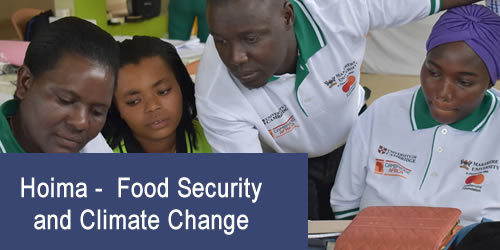
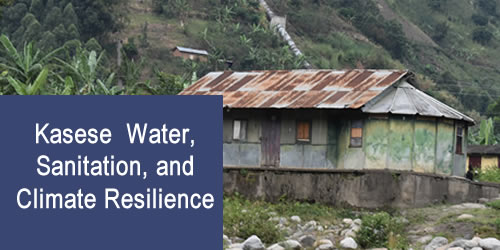
CHART-CR focuses on establishing a strong foundation across three pilot thematic areas: Water for Food, Water for Health, and Food Security. These thematic areas address critical challenges related to access to safe drinking water, domestic water management, climate-smart agricultural practices, post-harvest handling, and the development of sustainable and resilient food systems. In addition, the project prioritizes financial inclusion and livelihood enhancement as key enablers for building long-term climate resilience.
Hoima District Thematic Themes
These thematic areas highlight the interconnected challenges of food security, climate variability, and refugee–host community dynamics shaping livelihoods in Hoima District.
-
✔ Theme 1: Food Security
- Availability of food in households and communities
- Access to farming inputs (seeds, fertilizers, tools)
- Nutritional knowledge and dietary diversity
- Coping strategies for food shortages
- Role of women, youth, and community groups in food security
-
✔ Theme 2: Climate Change and Variability
- Observed changes in rainfall, temperature, and seasons
- Extreme weather events (droughts, floods, storms) and impacts
- Effects of climate variability on crop and livestock production
- Community awareness and perceptions of climate change
- Climate adaptation strategies at household and community level
-
✔ Theme 3: Refugee-Host Community Dynamics
- Interaction and collaboration between refugees and host communities
- Shared challenges in food security and water access
- Social cohesion and conflict resolution strategies
- Youth engagement in community initiatives
- Knowledge and skill sharing in agriculture and climate adaptation
Kasese District Thematic Themes
These thematic areas address water access, sanitation, and climate-related risks affecting vulnerable communities in Kasese District
-
✔ Theme 1: Climate Change Experience
- Changes in rainfall patterns, including delayed, irregular, or heavy rains
- Increased occurrence of floods and prolonged droughts
- Impacts of climate change on water sources and toilet facilities
- Differences and similarities in climate-related challenges faced by refugees and host communities
-
✔ Theme 2: Water Access and Availability
- Main sources of water used by the community
- Seasonal availability and adequacy of water
- Effects of floods and droughts on water sources
- Challenges arising from shared water sources between refugees and host communities
-
✔ Theme 3: Sanitation and Hygiene
- Types of sanitation facilities used in the community
- Effects of floods and heavy rains on toilets and latrines
- Hygiene practices during periods of water scarcity
- Common health problems linked to poor sanitation during extreme weather
-
✔ Theme 4: Coping and Resilience
- Household coping strategies during water shortages
- Community actions to protect water sources and sanitation facilities
- Effective and ineffective coping mechanisms
-
✔ Theme 5: Gender and Vulnerable Groups
- Impacts of WASH challenges on women, children, the elderly, and persons with disabilities
- Safety, privacy, and dignity concerns for women and girls
- Participation of vulnerable groups in water and sanitation decision-making
-
✔ Theme 6: Support and Future Solutions
- Support received from government and NGOs for water and sanitation
- Effectiveness of existing support in addressing climate challenges
- Community suggestions for improving climate-resilient WASH services
Our Goal